

Breast Cancer Awareness Month Highlights Radiation Injury and HBOT Care
Hyperbaric oxygen therapy (HBOT)
wound healing
medical-grade oxygen for HBOT treatments
Advanced Hyperbaric Recovery Inc_
Advanced Hyperbaric Recovery highlights HBOT’s role in supporting breast tissue healing after radiation injury and post-mastectomy wound complications.
SAN RAFAEL, CA, UNITED STATES, October 20, 2026 /EINPresswire.com/ -- Breast Cancer Awareness Month brings attention to the long-term health needs of people who have completed breast cancer treatment. Surgery and radiation can affect healthy tissue as part of the treatment area. Some patients later experience wound problems, skin changes, tissue breakdown, fibrosis, swelling, or other radiation-related tissue injuries. Hyperbaric oxygen therapy (HBOT) has an established role in the care of selected radiation injuries and compromised skin flaps and grafts.Advanced Hyperbaric Recovery Inc. is highlighting the clinical role of Hyperbaric Oxygen Therapy (HBOT) in supporting breast and chest wall tissue healing after cancer treatment. The focus is on treatment-related tissue injury rather than breast cancer itself. HBOT does not treat or cure breast cancer. Its clinical use in this setting centers on supporting damaged tissue and wound healing as part of a broader medical plan.
Radiation Can Cause Long-Term Tissue Changes
Radiation therapy is an important part of breast cancer treatment for many patients; the good news is that, for many patients, radiation destroys cancer. At times, unfortunately, it can also affect healthy tissue within the treated area. Some tissue changes occur during or soon after treatment, while delayed radiation injury can appear months or many years later.
Radiation-related tissue injury can involve the skin, soft tissue, and small blood vessels. Patients can experience fibrosis, pain, swelling, skin changes, tissue breakdown, or wounds that do not heal as expected. These problems can require care from several medical specialists, based on the type and severity of the tissue injury.
Delayed radiation injury is an established indication for HBOT. The Undersea and Hyperbaric Medical Society (UHMS) recognizes delayed radiation injuries among the accepted indications for hyperbaric oxygen therapy. Treatment is directed toward tissue affected by radiation and its impaired healing process.
HBOT Supports Healing in Radiation-Affected Tissue
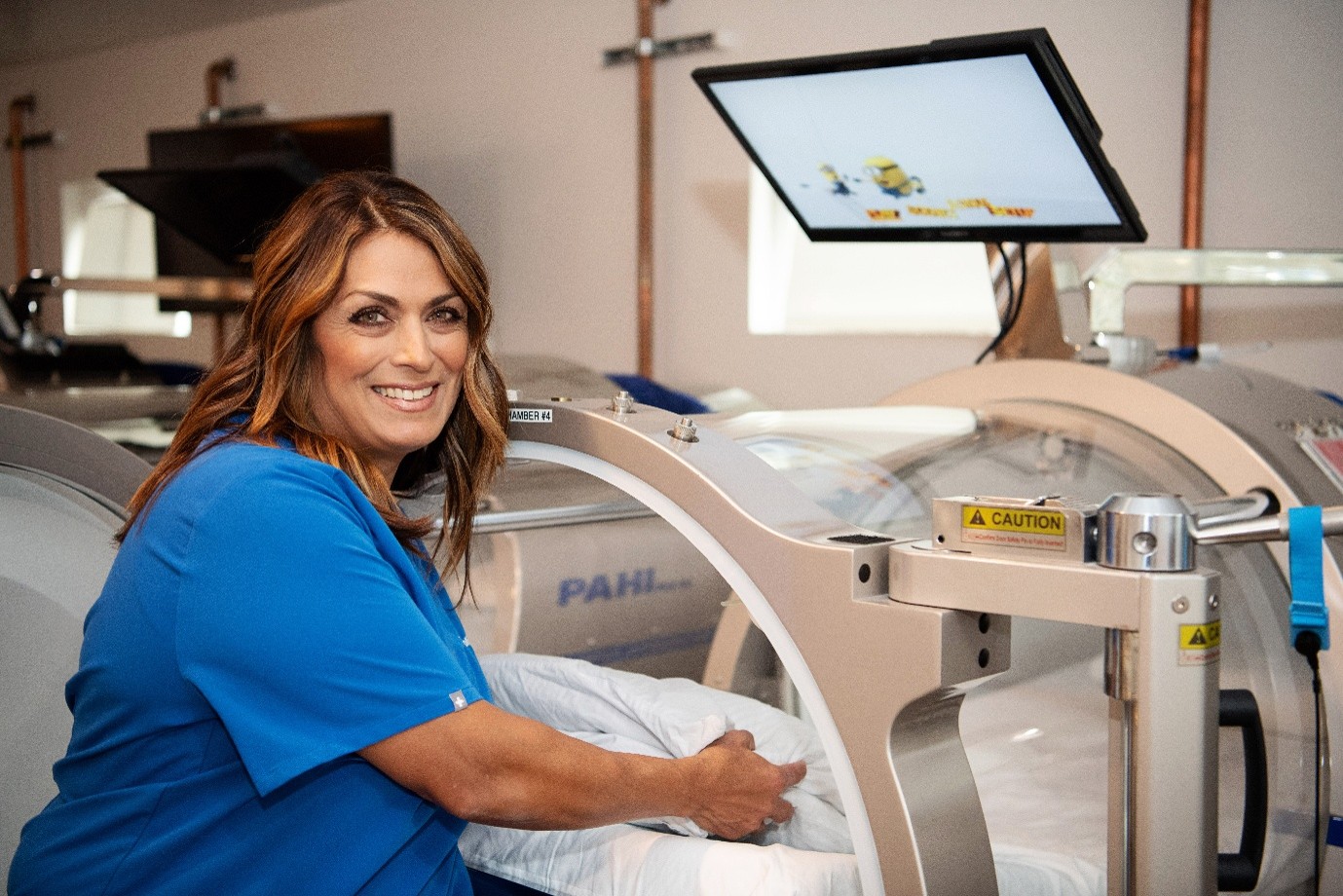
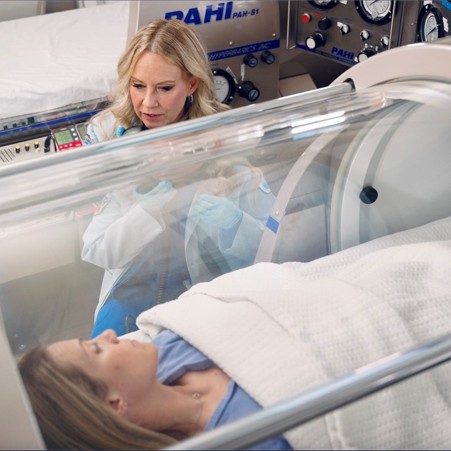
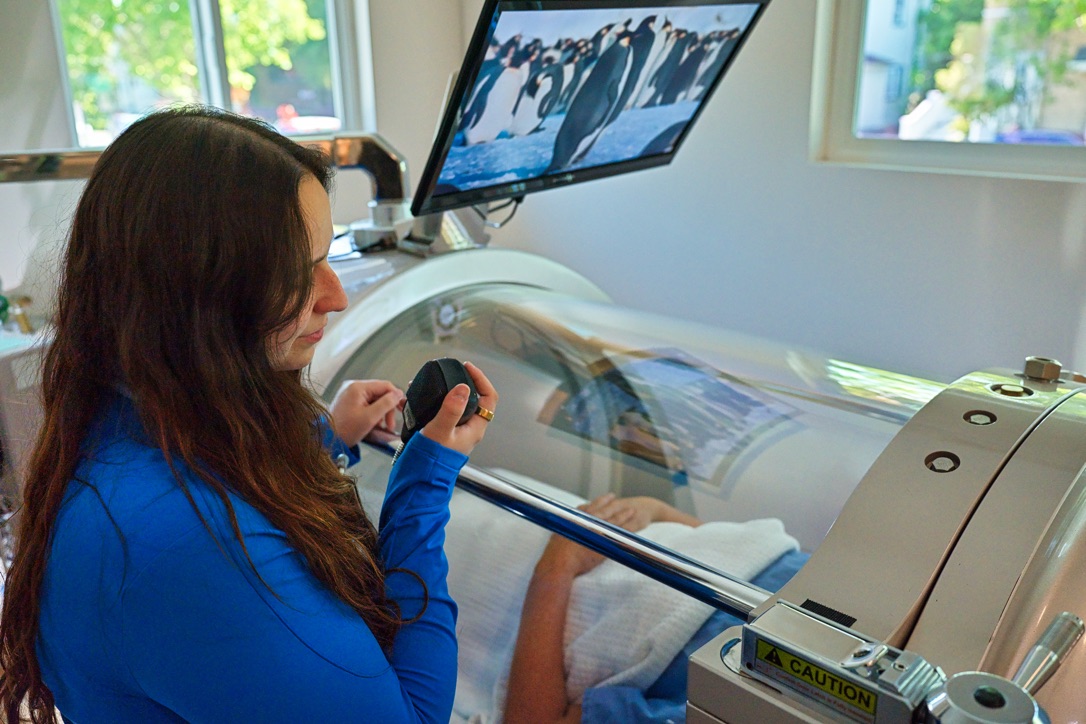
HBOT involves breathing 100% medical-grade oxygen inside a slightly pressurized HBOT chamber. ONLY HARD chambers can go to proven depths for protocols that work. The pressure increases the amount of oxygen dissolved in the blood plasma and other liquids and soft tissue, allowing oxygen to reach tissues up to four times further into the tissue that need support during repair.
Radiation can damage small blood vessels and change the normal structure of tissue. These changes can affect oxygen delivery and tissue repair. HBOT increases oxygen availability and supports biological processes involved in wound healing and tissue recovery.
For breast and chest wall radiation injuries, the purpose of HBOT is to support the healing of damaged tissue. It is not a replacement for cancer treatment, surgery, wound care, or other medical services.
Research Examines Breast Cancer Radiation Injury
A systematic review published in The Breast examined HBOT for late radiation-related tissue effects in patients treated for breast cancer. The review included nine studies with a combined total of 1,308 patients. Researchers assessed outcomes that included pain, fibrosis, lymphedema, skin problems, and arm and shoulder movement.
The review reported significant pain reduction in four of five studies. Fibrosis showed significant improvement in one of two studies. Lymphedema of the breast or arm improved significantly in four of seven studies. Both studies that assessed arm and shoulder mobility reported significant improvement. Skin problems affecting the breast also showed significant improvement in one of two studies.
Case Study 1: A Ten-Year Review of Post-Mastectomy Wound Care
A single-institution retrospective review examined HBOT for complex wound complications after breast cancer surgery. The study covered a 10-year period from January 2014 through September 2024 and included patients treated for nonhealing wounds after mastectomy.
The complications included partial nipple-areolar complex ischemia or necrosis, mastectomy flap necrosis, wound dehiscence, and radiation-induced skin changes. Twenty patients received HBOT. Every patient was treated at 2.0 atmospheres absolute (ATA) for 90 minutes per session. The median number of treatments was 30.5 sessions, with an interquartile range of 25.5 to 58 sessions.
Thirteen patients, representing 65% of the study group, received perioperative radiation therapy. Most patients, 90%, presented with mastectomy flap necrosis or wound dehiscence.
Case Study 2: https://cris.maastrichtuniversity.nl/en/publications/hyperbaric-oxygen-treatment-for-skin-flap-necrosis-after-a-mastec/
Case Study 3:https://journals.cambridgemedia.com.au/wpr/volume-28-number-3/hyperbaric-oxygen-therapy-treatment-radiation-induced-wound-complications-breast-cancer
Complete Wound Healing Was Reported in the Review
The retrospective review reported complete wound healing in all 20 patients. This represented a 100% wound-healing rate within the study group. The authors reported that healing allowed patients to continue their planned oncologic therapies.
The study also found a significant relationship between earlier HBOT initiation and faster healing times, with a p-value of 0.023.
The authors concluded that HBOT served as an adjunctive treatment for compromised mastectomy wounds within a multidisciplinary approach to complex wound management.
Compromised Flaps and Grafts Require Timely Medical Care
Breast cancer surgery can involve skin flaps or grafts during reconstruction and wound management. A flap or graft that is healing normally does not require HBOT simply because reconstructive surgery has taken place.
A compromised flap or graft presents a different clinical situation. Reduced blood flow and tissue oxygenation can affect tissue survival and healing. Compromised grafts and flaps are recognized as an HBOT indication, and treatment can be used alongside surgical evaluation and wound management.
HBOT provides increased oxygen availability to tissue during a period of impaired healing. The treatment plan depends on the condition of the tissue, the cause of the compromise, the surgical procedure, and the patient's overall medical status.
Breast Reconstruction Can Involve Complex Tissue Healing
Breast reconstruction after cancer surgery can require careful management of tissue blood flow and wound healing. Radiation history can also affect the quality of local tissue and its ability to recover after surgery.
HBOT has been studied in breast reconstruction patients with ischemic tissue complications. Research in this area includes retrospective and comparative studies examining outcomes such as tissue survival and wound healing.
The clinical role of HBOT remains focused on appropriate tissue complications rather than routine treatment after every breast reconstruction procedure. Surgical assessment remains central to identifying tissue compromise and selecting the appropriate treatment plan.
Healing Remains Part of Long-Term Breast Cancer Care
Finishing surgery, chemotherapy, or radiation therapy does not always mean that all treatment-related tissue problems have ended. Some patients continue to experience changes in the treated breast or chest wall long after primary cancer treatment.
Radiation-related tissue injury can develop over time. The condition can affect skin quality, soft tissue, wound healing, comfort, and movement. Identifying the cause of a tissue problem helps guide the medical plan.
For appropriate patients, HBOT can be incorporated into care for delayed radiation injury or compromised tissue. It works alongside other medical services rather than replacing them. Oncology follow-up, surgical care, wound treatment, and other indicated therapies remain important parts of comprehensive care.
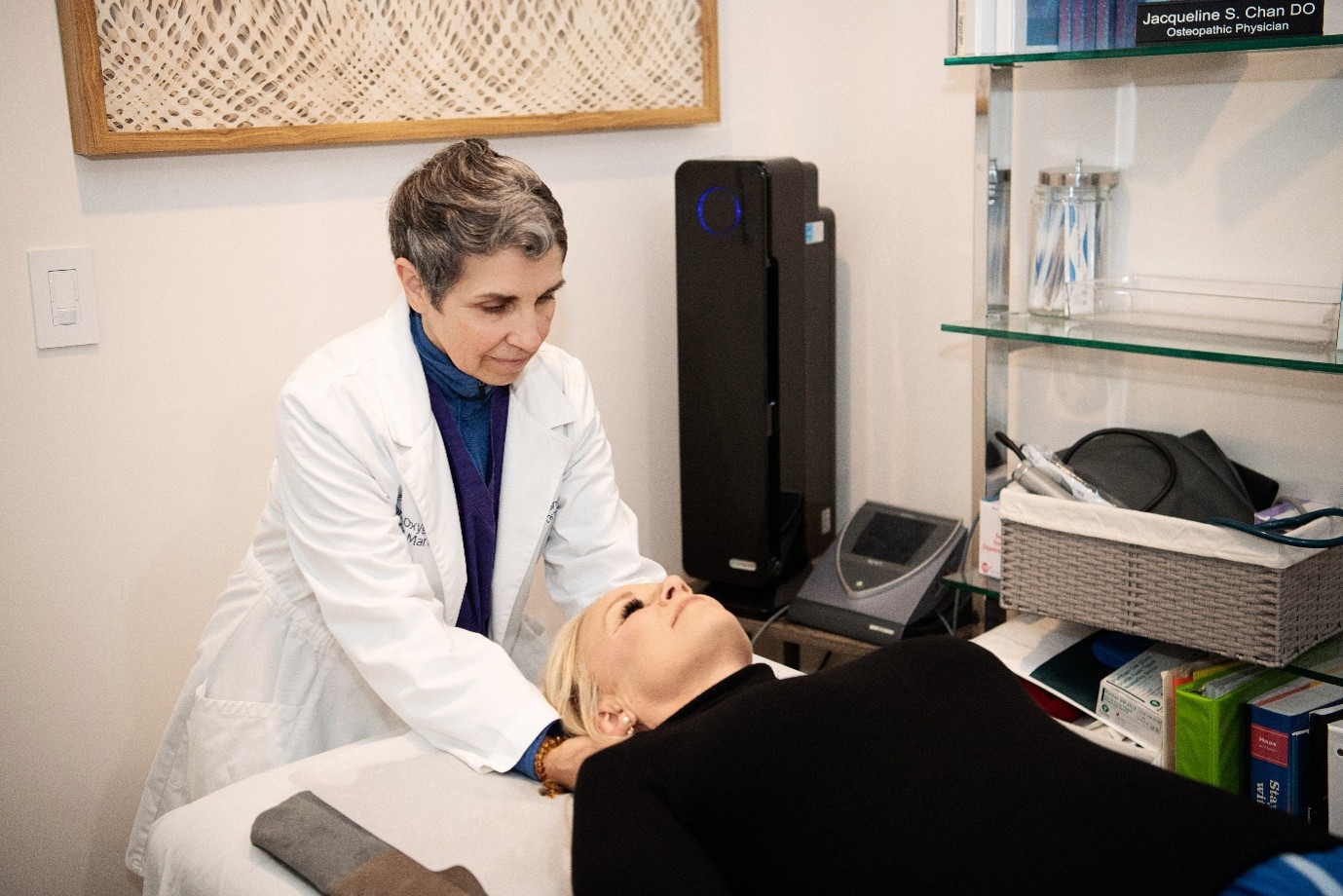
Physician-Directed HBOT for Tissue Recovery
Advanced Hyperbaric Recovery Inc. provides physician-directed hyperbaric oxygen therapy in an outpatient medical setting. The center uses hard-shell chambers and 100% medical-grade oxygen for HBOT treatments. Care is provided under medical supervision, with treatment plans based on the patient's clinical condition and the indication being treated.
For breast cancer patients and survivors with appropriate radiation-related tissue injuries or compromised flaps and grafts, HBOT can be part of a coordinated wound and tissue-healing plan. The clinical focus remains on the injured tissue and its ability to heal, rather than on treatment of the underlying cancer.
Breast Cancer Awareness Includes Tissue Healing
Breast Cancer Awareness Month provides an opportunity to discuss health concerns that can continue after primary cancer treatment. Radiation-related tissue injury and compromised surgical tissue are important parts of post-treatment care.
HBOT has established clinical uses for delayed radiation injury and compromised grafts and flaps. Breast-specific research has also examined outcomes involving pain, fibrosis, lymphedema, skin changes, and movement. A 10-year retrospective review of patients treated for post-mastectomy wound complications reported complete wound healing in all patients and found that earlier HBOT initiation was associated with faster healing.
About Advanced Hyperbaric Recovery Inc.
Advanced Hyperbaric Recovery Inc. is an award-winning, medical-grade, outpatient hyperbaric oxygen therapy center in San Rafael, California. The center provides physician-directed HBOT using hard-shell chambers and 100% medical-grade oxygen. Its clinical services include treatment for recognized hyperbaric indications, including delayed radiation injury and compromised grafts and flaps.
Media Contact:
Advanced Hyperbaric Recovery
Address: Advanced Hyperbaric Recovery, 1118 Irwin St, San Rafael, CA 94901
Phone: (415) 785-8652
Fax: (415) 785-8697
Advanced Hyperbaric Recovery
Advanced Hyperbaric Recovery
+1 415-785-8652
Info@ImproveHealing.com
Visit us on social media:
Instagram
Facebook
Legal Disclaimer:
EIN Presswire provides this news content "as is" without warranty of any kind. We do not accept any responsibility or liability for the accuracy, content, images, videos, licenses, completeness, legality, or reliability of the information contained in this article. If you have any complaints or copyright issues related to this article, kindly contact the author above.
