

Building Reliable Diabetic Animal Models for Global Diabetes Research
Characterizing STZ‑Induced SD Rat Model with Multi‑Organ Diabetic Complications
HUSTON, TX, UNITED STATES, August 25, 2026 /EINPresswire.com/ -- Research Background and Rationale for Model Establishment
Diabetes Mellitus (DM) is a chronic metabolic disorder characterized by persistent hyperglycaemia, triggered by insufficient insulin secretion or insulin resistance, accompanied by disrupted carbohydrate, lipid and protein metabolism. Long-term DM leads to complications in multiple organs including the heart, liver, kidneys, lungs, nervous system and blood vessels, representing a globally prevalent and high-burden public-health challenge. With shifting dietary patterns and lifestyles, the incidence of diabetes keeps rising. Deciphering disease mechanisms and identifying safe and effective therapeutic agents and interventions have become core research priorities in biomedicine, metabolic science and new-drug development.
Limited by ethical constraints, inter-individual variability and numerous confounding factors, human clinical studies cannot support in-depth mechanistic exploration, dose-gradient validation or long-term efficacy-and-toxicity assessment. Standardized animal models are therefore indispensable tools for basic diabetes research and new-drug development. Streptozotocin (STZ) specifically damages pancreatic islet β-cells to induce stable hyperglycaemia, featuring high modelling success rate, excellent reproducibility and typical complications. It serves as a classic and widely-adopted protocol for establishing diabetic rat models, and is extensively applied in pathological mechanism dissection, drug screening, pharmacodynamic evaluation and complication-related research of diabetes.
This document compiles the full standardized workflow for the STZ-induced diabetic SD rat model, including reagent preparation, experimental grouping, detection indicators and pathological outcome analysis, providing a reproducible practical reference for researchers worldwide.
Basic Model Information
Target species: Human Model induction: Chemical-induced diabetic model using Streptozotocin (STZ) Animal strain: SPF-grade male SD rats, 4-6 weeks old, weighing 180-200 g Experimental groups: Six groups in total: normal control group, model group, positive-drug group, low-dose test-drug group, medium-dose test-drug group, high-dose test-drug group; 15 animals per group Experimental duration: 4 weeks
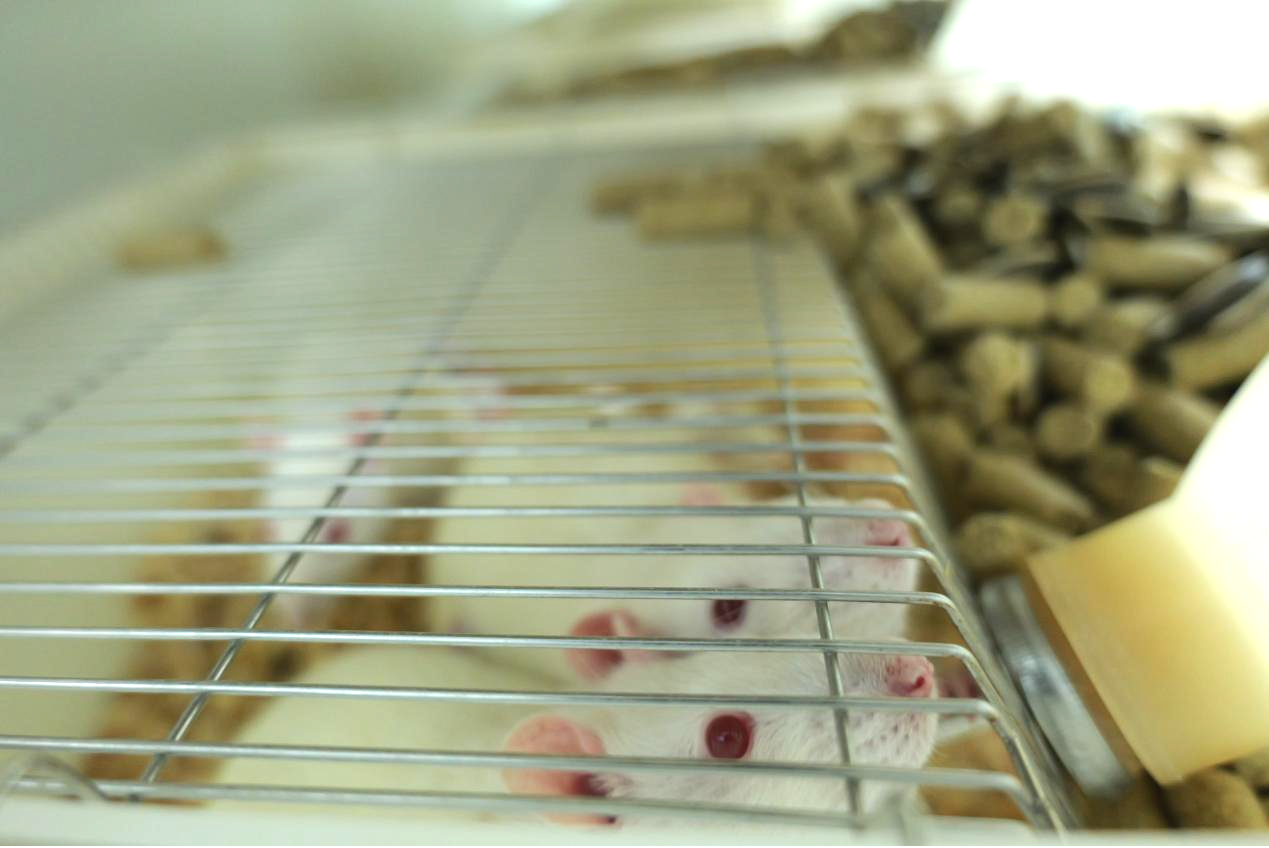
Figure1 Cloud-Clone SPF animal room
Key Reagents and Preparation Protocols
Core reagents: Citric acid, trisodium citrate dihydrate, Streptozotocin (STZ)
1.Preparation of sodium citrate buffer: Dissolve 2.10 g citric acid in 100 mL double-distilled water to prepare citric acid stock solution (Solution A). Dissolve 2.94 g trisodium citrate dihydrate in 100 mL double-distilled water to prepare sodium citrate stock solution (Solution B). Mix Solution A and Solution B at a ratio of 1:1.32. Calibrate with a pH meter and adjust pH to 4.0 to obtain 0.1 mol/L STZ-specific sodium citrate buffer.
2.Preparation of STZ working solution: Dissolve STZ powder in the above-mentioned 0.1 mol/L sodium citrate buffer to make a 10 mg/mL STZ working solution, then sterilize by filtration through a 0.22 μm filter. Perform all preparation steps under light-shielded conditions. Prepare fresh solution immediately before use to avoid reagent inactivation.
Standardized Modelling Procedures
1.Rats are fasted for 12 h prior to modelling with free access to water, to empty the gastrointestinal tract, stabilise baseline blood glucose and reduce experimental interference.
2.Rats in the model group receive intraperitoneal injection of STZ working solution at 55 mg/kg body weight. Rats in the normal control group are intraperitoneally injected with an equal volume of blank sodium citrate buffer.
3.Seven days after STZ administration, measure fasting blood glucose of rats. Only animals with fasting blood glucose ranging from 13.5-25 mmol/L are enrolled in formal experiments; animals with failed modelling are excluded.
4.After successful model establishment, measure fasting blood glucose and body weight at fixed intervals every week. Continuously track blood-glucose fluctuations and dynamic body-weight changes to evaluate model stability.
5.At Week 4 of the experiment, after measuring body weight and fasting blood glucose for each group, collect blood via eyeball enucleation. Allow whole-blood samples to stand at room temperature for 2 h, then centrifuge at 3000 r/min for 10 min at 4 °C to isolate serum. Aliquot serum and store at -80 °C for subsequent analysis. Harvest epididymal fat, subcutaneous fat, skeletal muscle, white adipose tissue, liver, lung, heart and kidney tissues for subsequent pathological staining and molecular biological assays.
Model Phenotypes and Analysis of Detection Results
1. General Behaviour and Physical Signs of Rats
Rats in the normal control group show moderate body size, good mental status, normal mobility, quick response, smooth and glossy fur, as well as regular food and water intake. Diabetic model rats exhibit classic “three-poly-one-low” symptoms: significant body-weight loss, listlessness, slow response, coarse and dull fur, hypokinesia, hunched posture and polyuria. Statistical analysis reveals that compared with the normal control group, diabetic model rats display markedly decreased body weight, together with significantly increased heart and liver organ coefficients, with statistically significant inter-group differences.
2. Changes in Glucose and Lipid Metabolic Markers
Throughout the experimental period, fasting blood glucose, serum triglyceride and total cholesterol remain stable without obvious fluctuations in the normal control group. By contrast, the diabetic model group shows substantially elevated fasting blood glucose, serum triglyceride and total cholesterol versus controls, recapitulating characteristic glucose-lipid metabolic disturbance of diabetes, which confirms successful model construction.
3. Pathological Morphological Changes in Multiple Organs (HE / Oil Red O Staining)
(1) Cardiac Tissue Changes
Normal control group: Myocardial fibres are neatly and densely arranged with clear tissue architecture; nuclear chromatin is evenly distributed; extracellular stroma is sparse; microvascular structure is intact with few fibroblasts and no obvious inflammatory infiltration. Diabetic model group: Myocardial fibres are disorganised; cardiomyocytes are hypertrophic with widened intercellular spaces and blurred tissue structure. Partial nuclei present with karyotheca shrinkage and pyknosis, accompanied by prominent infiltration of inflammatory cells and fibroblasts, showing pathological features of diabetes-induced myocardial injury.
(2) Pulmonary Tissue Changes
Normal control group: Pulmonary architecture is intact; alveoli are evenly distributed; alveolar septa and bronchial walls are well-preserved; pulmonary interstitium is homogeneous with no notable inflammatory-cell infiltration. Diabetic model group: Disorganised pulmonary structure, partial alveolar atrophy and collapse with bullae formation; thickened bronchial walls; increased matrix and fibroblast proliferation in pulmonary interstitium and perivascular regions, accompanied by extensive inflammatory-cell infiltration, demonstrating pathological alterations of diabetic lung injury and inflammatory fibrosis.
(3) Renal Tissue Changes
HE-staining results demonstrate that rats in the diabetic model group present glomerular hypertrophy and hyperplasia, thickened glomerular mesangial basement membrane, and obvious vacuolar degeneration of renal tubule epithelial cells, consistent with typical pathological injuries in early-stage diabetic nephropathy.
(4) Hepatic Tissue Changes
Oil Red O staining shows minimal lipid deposition and intact structure in liver tissues of the normal control group. In the diabetic model group, large-sized lipid droplets are widely distributed within hepatocytes, presenting massive abnormal hepatic lipid accumulation and pathological phenotypes of diabetic fatty liver and hepatic metabolic damage.
Statistical Analysis
All experimental data are processed with SPSS software. Measurement data are expressed as mean ± standard deviation (x ± s). One-way analysis of variance (ANOVA) is applied for multi-group comparison, and Student’s t-test is adopted for two-group comparison. Differences with P < 0.05 are considered statistically significant.
Summary
This protocol adopts single low-dose intraperitoneal injection of STZ to rapidly and stably establish the SD rat diabetic model. The model recapitulates hallmark phenotypes including hyperglycaemia and lipid metabolic disturbance, and induces pathological injuries of heart, liver, kidney and lung complications. Featuring high stability, favourable reproducibility, simple operation and cost-effectiveness, this model fits diverse research scenarios, such as exploration of diabetes pathogenesis, hypoglycaemic drug screening, pharmacodynamic assessment and complication mechanism investigation. It represents a classic and reliable animal-model protocol for metabolic disease research.
Cloud-Clone operates a standardized SPF-grade animal experimental platform, delivering end-to-end services including compliant animal housing, model construction, drug administration intervention, sample processing and pathological detection. The platform reliably builds various animal models for diabetes, metabolic disorders, inflammation and oncology. Strict controls are implemented for animal strain, age, body weight and modelling parameters. Full-process standardized quality control ensures high modelling success rate and reliable data reproducibility. Supported by comprehensive animal-experiment systems, pathological testing platforms and molecular-biology capabilities, Cloud-Clone provides one-stop support for researchers worldwide, accelerating metabolic-disease mechanism studies and new-drug R&D to facilitate high-quality scientific outputs.
About Cloud-Clone Corp.
Cloud-Clone Corp. is dedicated to the development and production of high-quality immunoassay reagents and detection solutions. With a focus on antibody engineering, multiplex assay development, and cross-platform compatibility, the company provides research tools designed to support precision medicine and advanced biomedical investigation globally. Our core products and services include the research and development of proteins, antibodies, ELISA kits, primary cells, and multiplex cytokine assay kits, as well as professional CRO services to fully meet the diverse needs of biomedical research and related fields.
For more information about Cloud-Clone Corp, visit www.cloud-clone.com.
CLOUD-CLONE CORP.(CCC)
Tel: 001-832-538-0970, 0086-27-8425-9552
Email: mail@cloud-clone.com, sales@cloud-clone.us
Visit us on social media:
LinkedIn: https://www.linkedin.com/company/cloud-clone-corp/
Instagram: https://www.instagram.com/cloudclonecorp2023/
TickTok: https://www.tiktok.com/@cloudclonecorp2026
SuKi Duan
CLOUD-CLONE CORP.WUHAN
email us here
Visit us on social media:
LinkedIn
Instagram
TikTok
X
Legal Disclaimer:
EIN Presswire provides this news content "as is" without warranty of any kind. We do not accept any responsibility or liability for the accuracy, content, images, videos, licenses, completeness, legality, or reliability of the information contained in this article. If you have any complaints or copyright issues related to this article, kindly contact the author above.
